I have been travelling across Africa for seventeen years.
Not in the curated, itinerary-managed, airport-transfer-included sense of travelling. I mean backpacking through Northern Kenya when people told me I was asking to get killed. Overland journeys by public means — buses, matatus — minibuses — trains, by whatever was moving in the right direction — through countries I had no business being in, by budget, by convention, by anyone else’s definition of ready.
So when I sit across from industry peers and hear the word “authentic” used to describe a thirty-minute cultural village stop arranged around a camera schedule, something in me goes very quiet.
And then very loud.
I am celebrating eight years of building Wangechi Gitahi Travels. Eight years of choosing — deliberately, consistently, sometimes against considerable pressure — to tell a version of Africa that is honest. In the stories we tell, the experiences we curate, and the communities we work with. I love this continent and the tourism industry too much to keep sitting in silence about what we are getting fundamentally wrong.
We have mistaken aesthetics for authenticity. And it is costing us — and this continent — more than we are willing to admit.
Open any major African travel brochure. Scroll through any luxury safari brand’s Instagram page. Read through the copy on any destination marketing campaign.
Notice what you see. Notice, more importantly, what you do not.
The landscapes are immaculate. The sunsets are perfectly filtered. The wildlife is dramatic and beautifully lit.
The people are largely absent.
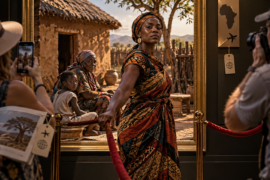
When they do appear, it is in controlled, costumed, carefully composed moments — framed to evoke a timeless, traditional Africa that flatters the traveler’s fantasy of stepping into something untouched by the modern world.
And there it is. That word.
Untouched.
I want us to sit with what we mean when we use it — because if we are honest, it exposes something uncomfortable about who we are actually building these experiences for.
No place on this continent is untouched. Not one.
Every landscape in Africa has been shaped by centuries of human presence — by migration, culture, conflict, agriculture, memory, survival, ingenuity, and aspiration. The Maasai Mara is not a pristine wilderness that exists in spite of people. It exists because of the Maasai, whose relationship with that land predates tourism by generations. The dunes of Namibia carry the history of the Himba. The forests of Uganda carry the stories of communities who have stewarded them across time.
When we market a place as untouched, what we are really saying is this:
The people have been edited out of the story.
And we do it because we have learned that a certain audience finds it reassuring. Africa as backdrop. Africa as aesthetic. Africa as experience delivery mechanism — rather than a continent where 1.4 billion people actually live, create, evolve, and have very specific opinions about how they are represented.
This is where the industry gives itself too easy an exit.
We say: we are just meeting market demand.
But demand is not something that falls from the sky. We shape it. Through the images we choose to publish and the ones we choose not to. Through the language we put in our brochures. Through which stories we invest in amplifying and which realities we quietly allow to disappear from the frame.
Hotels. Destination campaigns. Luxury tourism brands. Tourism boards. Travel media. Content creators.
We all participate in constructing which version of Africa becomes visible. That is not a passive act. It is a choice. And we are making it every single day.
There is a difference between a guide performing local knowledge and a guide carrying it.
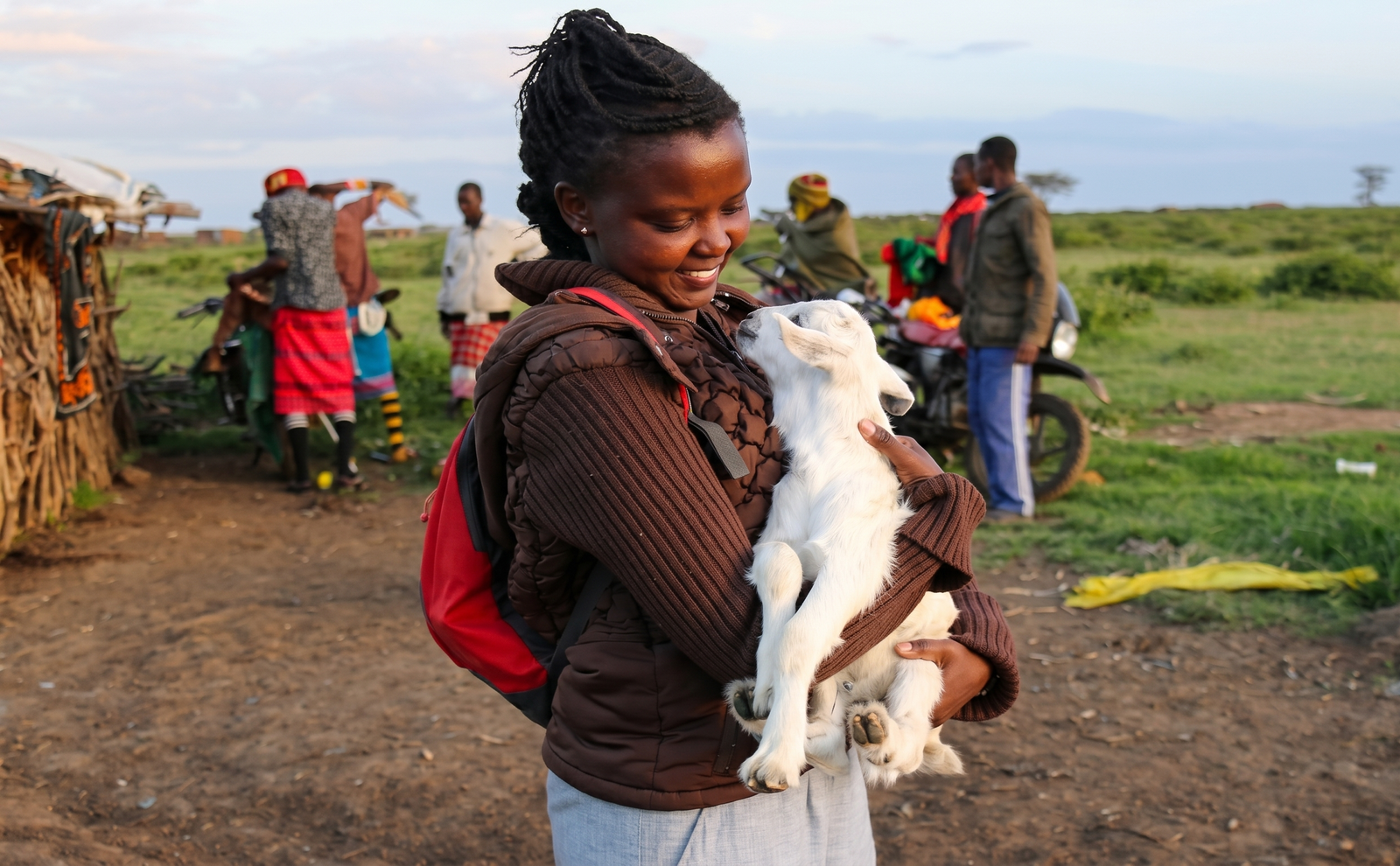
A guide who grew up on that land — who can tell you which plants her grandmother used, why the community recently changed how they manage this particular grazing corridor, what the elders argued about at the last meeting — that guide is carrying something real. Something irreplaceable.
That guide exists. I have met them.
The question is whether we are building tourism products that create space for them — or products that reduce them to a script.
The traveler may not immediately know the difference. But they feel it.
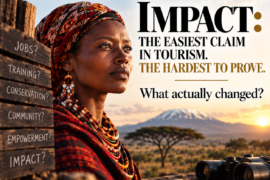
Almost every safari lodge, every community tourism product, every destination campaign carries language somewhere about community benefit. Percentages. Partnerships. Sustainable tourism commitments. Impact promises.
What they rarely have: specific schools. Specific jobs. Specific names. Specific, verifiable, auditable evidence that tourism passing through that place is measurably changing lives in that communityity — not just generating feel-good copy for a website.
This vagueness is not accidental. Vagueness protects brands from accountability. But it also hollows out the very thing we claim to be offering — an experience that connects the traveler to the real people and real places of this continent.
The comfortable fiction costs real communities real things. Land access. The power to decide how their own culture is represented. A fair share of the money their story generates. The right to tell that story in their own terms.
If we are serious about responsible tourism — not just as a marketing category but as an operating principle — we need to move from vague commitments to auditable specifics. What percentage, exactly? Of what revenue? Flowing to which communities, via which governance structures, measured by whom?
The industry players who can answer those questions clearly are the ones worth trusting. The ones who cannot should be asked why.
I say this as someone who is part of the industry I am critiquing.
Not above it. Not outside it. In it — with all the compromises, pressures, and moments of looking the other way that come with building a business inside a broken system.
I have chosen the safer photograph. Used the softer language. Let a community interaction end before it really began because the schedule said move on. Buried the complexity because a client’s expectations left no room for it.
I have done it consciously sometimes. Unconsciously more times than I would like to admit.
Seventeen years travelling this continent and eight years in this industry have taught me one thing above everything else — knowing better does not automatically mean doing better. Not when the commercial pressure is real, the client is waiting, and the easier path is right there.
But I am done pretending that pressure is an excuse.
For myself. And for all of us.
This is not an indictment of everyone. There are operators, guides, lodges, hotels, tourism boards, destination marketers, content creators, storytellers, and other industry players across this continent doing this work with integrity — quietly, rigorously, without making a spectacle of their ethics. They are worth finding, worth supporting, and worth learning from.
But they operate inside an industry that, at its dominant scale, still defaults to the sanitised, people-free, untouched version of Africa — because it is easier to sell, simpler to photograph, and less disruptive to the fantasy many travelers arrive with.
The traveler is changing.
The next generation — and a growing segment of current travelers — are arriving with more questions, more awareness, and more desire for genuine exchange. They are not looking for a backdrop. They are looking for a real place, with real people, and a real story. They are increasingly willing to call out inauthenticity when they encounter it.
The industry players who will thrive in the next decade are building for that traveler. The ones still polishing a fantasy that an increasingly skeptical market is beginning to see through will not.
Africa does not need to be softened to be beautiful.
It does not need to be simplified to be compelling.
It does not need its people removed to be marketable.
The Africa I have spent seventeen years travelling across — complex, contradictory, brilliant, layered, alive — is the most extraordinary destination on earth precisely because of its humanity. Not in spite of it.
Our job, as an industry, is to be brave enough to sell that.